
Cuy in Peru: Why Peruvians Eat It and Where to Try It in Cusco
Quick Answer
Pariwana’s travel blog gathers articles for young travelers about Peru, Lima, Cusco, local culture, food, adventure, budget travel and practical tips.
Updated: August 11, 2026
Quick answer
Cuy is the Andean name for guinea pig, an animal that has been domesticated in South America for thousands of years. While many travelers know guinea pigs mainly as pets, in Peru they also have a long history as farmed food animals. In Cusco, baked cuy is one of the traditional preparations visitors can try.
Key takeaways
Cuy has been part of Andean food culture for thousands of years.
Its domestication predates the Inca Empire.
Peru still has family, family-commercial and commercial guinea pig farming.
Baked cuy is particularly relevant for travelers exploring Cusco's regional cuisine.
The pet-versus-food question is best understood as a cultural difference rather than a travel shock challenge.
Food is one of the fastest ways to discover how different cultures see the world.
Cuy is a perfect example.
If you grew up in North America or parts of Europe, a guinea pig might immediately make you think of a pet. Arrive in the Peruvian Andes, however, and you will discover another relationship with the same animal: cuy has been raised as food for generations.
That difference can feel surprising, but it becomes much more interesting once you understand the history behind it.
What exactly is cuy?
Cuy is the local Andean name for Cavia porcellus, the animal English speakers know as a guinea pig.
Research using archaeological evidence and ancient DNA shows that guinea pigs were domesticated in the Central Andes thousands of years ago, long before the rise of the Inca Empire.
This matters because cuy is sometimes presented to visitors as an unusual “Inca food.” The real story is older and broader than that.
Its history belongs to generations of Andean communities that raised animals close to home for food and household use.
Why do people eat guinea pig in Peru?
The simplest answer is: because it has been part of Andean food culture for thousands of years.
For many rural families, raising cuy became part of a small-scale food production system. That tradition continues today alongside more commercial farming.
Peru's National Institute for Agrarian Innovation, INIA, distinguishes family, family-commercial and commercial systems of guinea pig production and has worked on breeding, feeding and production methods.
So cuy is not merely a dish preserved for tourists or historic festivals. It remains part of an active agricultural and culinary tradition.
Pet or food? Understanding the cultural difference
This is where many international travelers experience their biggest surprise.
Animal welfare organizations in countries such as the United States and United Kingdom publish extensive advice on keeping guinea pigs as companion animals.
In the Andes, meanwhile, guinea pigs were domesticated for food thousands of years ago.
Both realities exist.
What people consider a pet, farm animal or culturally important food depends heavily on where they grew up. Visiting Peru does not mean you have to change how you personally feel about guinea pigs. It does offer a chance to understand why another culture developed a different relationship with them.
It is also worth avoiding a stereotype in the opposite direction: not every Peruvian eats cuy. Peru's food culture is highly regional, and individual families have different habits and preferences.
How is cuy raised in Peru today?
Traditional family farming still exists, but it is not the only system.
INIA documents family, family-commercial and commercial production and has promoted more technical approaches to breeding, nutrition and animal management.
For some rural households, raising guinea pigs can contribute both food and income.
That is useful context for travelers: the plate you see in a Cusco restaurant is connected to a much larger agricultural tradition.
How is cuy cooked in Peru?
There is no single Peruvian cuy recipe. Preparation varies by region.
Cuy al horno — baked guinea pig
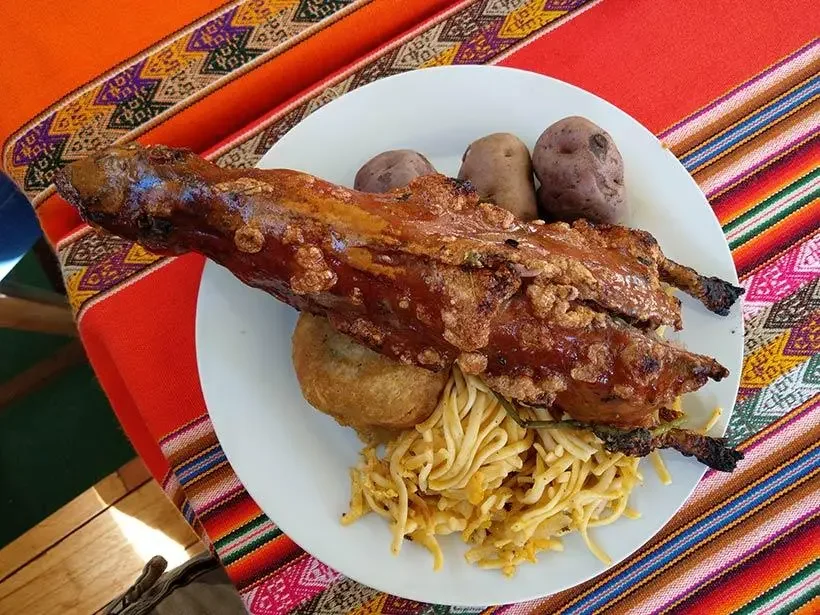
For travelers in Cusco, baked cuy is one of the most relevant versions to know.
The animal is seasoned and roasted, with side dishes depending on the restaurant. Current Cusco menus continue to feature baked cuy as part of regional cuisine.
Cuy chactado
Cuy chactado is fried and flattened.
Peru.travel describes the traditional technique as frying the guinea pig with a stone placed over it, producing a flat, crisp preparation.
It is one of the best-known guinea pig dishes in Peru, although regional styles differ.
Picante de cuy
Another Peruvian preparation is picante de cuy.
Peru.travel's recipe uses portions of guinea pig with garlic, ají panca and potatoes, frying the meat before combining it with the sauce.
This is why simply saying “I tried guinea pig” does not tell you much about the actual dish. Roasted, fried and sauced preparations can be very different.
What does cuy taste like?
There is no perfect universal comparison.
How it tastes depends heavily on seasoning, cooking method and the part you are eating, so comparing it automatically with chicken or rabbit can create expectations that may not match your meal.
One practical thing to know is that cuy is a small animal. When served whole, it contains plenty of small bones and eating it feels different from ordering a steak or a large cut of meat.
Fried and roasted versions may also focus on creating a browned or crispy exterior.
Will it be served whole?
Sometimes, yes.
This can be the biggest surprise for first-time visitors.
Some restaurants serve a whole guinea pig in a recognizable form. Others offer half portions, quarters, pieces or more contemporary presentations.
If that matters to you, ask how the dish is presented before ordering.
Trying local food should be about cultural curiosity, not proving how adventurous you are.
Is cuy worth trying in Cusco?
If you eat meat and are interested in Andean cuisine, it can be a meaningful food experience.
Cusco is much more than the gateway to Machu Picchu. Its local food culture includes potatoes, corn, herbs, chicha, regional stews and cooking traditions shaped by the Andes.
Cuy is one piece of that story.
For more help planning your stay, check our Cusco travel guide for travelers.
And if guinea pig is simply outside your comfort zone, you can still discover plenty of other Cusco dishes without eating it.
Where can you try cuy in Cusco?
Menus change, so always confirm availability before heading out. When this guide was reviewed on August 11, 2026, these places had verifiable cuy dishes:
Mr. Cuy: its current menu includes whole baked cuy as well as other guinea pig-based preparations.
Pachapapa in San Blas: its official site describes a focus on regional Cusco cooking and lists cuy among its specialties.
Cusqueñísima Picantería: its digital menu includes baked cuy in different portion sizes, which may be useful for travelers who only want to taste it rather than order a whole animal.
Traditional picanterías and regional Cusco restaurants are also good places to ask what style of cuy they currently prepare.
Backpacker tips for trying cuy
Ask whether it comes whole or in portions before ordering.
If available, consider sharing a portion if you only want a taste.
Ask what comes on the side—the accompaniments are part of Cusco's food culture too.
Treat the dish as local food, not as an extreme-food dare.
Do not feel pressured to eat it. Understanding a tradition and personally enjoying it are two different things.
See Cusco beyond the postcard
One of the best things about backpacking is discovering that your idea of “normal” changes every time you cross a border.
Cuy shows that clearly.
You can arrive thinking of guinea pigs only as pets and leave understanding that in the Andes they also belong to an agricultural and culinary tradition thousands of years old.
You do not have to adopt the tradition yourself to understand why it matters.
And if you are still deciding where to stay while exploring the city, take a look at Pariwana Hostel Cusco.
Frequently asked questions
What animal is cuy?
Cuy is Cavia porcellus, the South American animal known in English as a guinea pig. It has a long history of domestication in the Andes.
Why do Peruvians eat guinea pig?
Guinea pigs have been raised for food in the Andes for thousands of years. The tradition predates the Inca Empire and continues today, especially in Andean regions.
Are guinea pigs pets in Peru?
They can be, but Peru also has a long-established tradition of raising them for food. Individual attitudes and eating habits vary.
What is the difference between cuy al horno and cuy chactado?
Cuy al horno is roasted, while cuy chactado is fried and flattened. Peru.travel describes the traditional chactado method as frying it with a stone placed on top.
Where can I eat cuy in Cusco?
Regional restaurants and picanterías serve cuy in Cusco. Current menus reviewed for this guide included dishes at Mr. Cuy, Pachapapa and Cusqueñísima Picantería. Always check availability before visiting.
Do I have to try cuy when visiting Peru?
No. It can be an interesting experience if you eat meat and want to explore Andean food culture, but trying it is entirely optional.
Sources checked
Ancient DNA research on guinea pig domestication in the Andes.
Peru's National Institute for Agrarian Innovation (INIA).
Peru.travel — Andean Cuisine.
Peru.travel — Picante de Cuy.
Humane World for Animals and RSPCA pet-care resources.
Current restaurant pages and menus checked on August 11, 2026.
✍️ Pariwana Editorial Team
Practical travel tips written by backpackers, for backpackers.
A practical guide to negotiating prices in local markets and taxis without being disrespectful.