


Weather in Lima Peru: monthly temperatures, humidity and what to wear all year
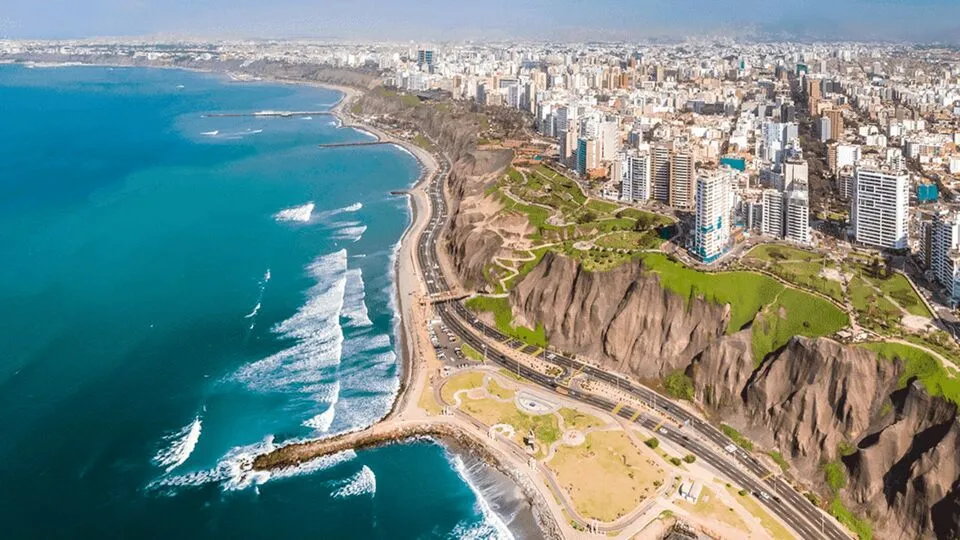
If you check Lima’s weather on your phone, everything looks super chill:
highs around 26 °C, lows around 16 °C, nothing crazy. You might think:
“Nice, mild weather, I won’t freeze or melt. Easy.”
Then you actually arrive in Lima and notice something different:
Winter isn’t that cold on paper, but your body feels it way more.
Summer never hits 35 °C, but the humidity hugs you like a steam room.
That’s Lima: a massive city built on a coastal desert, right next to the Pacific Ocean, heavily influenced by the cold Humboldt Current. The result is a strange mix:
Small temperature changes throughout the year.
Very high humidity almost every day.
Almost no real rain, but a fine misty drizzle known as “garúa limeña”.
If you already know Lima is “mild”, this guide will help you understand what that really feels like as a traveler:
How the weather in Lima works month by month.
Real talk about average temperatures vs. how they actually feel.
When you can expect sunshine and when the city goes full grey.
What garúa is, why Lima barely gets rain, and why everything’s still damp.
What to pack and wear in summer, winter and the in-between months.
Why you really should use sunscreen, even when the sky looks cloudy.
This article is written for young travelers, backpackers and digital nomads who want to enjoy Lima without suffering from the weather or overpacking their backpack.
1. Why is Lima’s weather so weird?
Lima sits at about 12° south of the Equator, so you’d expect classic tropical weather: intense heat, big storms, heavy rains… but nope.
Instead, you get something completely different, thanks to three main factors.
1.1 The Humboldt Current
The Humboldt Current is a cold ocean current that flows up along the coast of Chile and Peru.
It cools down the air above the ocean and the coastal strip.
It keeps Lima’s temperatures pretty moderate, without huge extremes.
It also helps create clouds and fog over the city, especially in winter.
That’s why Lima doesn’t roast like other cities at similar latitudes.
1.2 A coastal desert with almost no rain
Lima is built on a subtropical coastal desert. That’s why:
It gets very little rainfall during the year, sometimes less than 10–20 mm.
You won’t really see big stormy downpours like in tropical jungle cities.
When locals say “it rained a lot”, they often mean “the drizzle was heavy enough to soak the streets”, not a full storm.
So, paradoxically, you have:
A desert city
With humid air
And almost no proper rain
Pretty unique combo.
1.3 Low clouds, fog and drizzle
The cold ocean plus the moist air create low clouds and fog that drift over the city, mainly in winter.
Instead of turning into heavy rain, they turn into fine drizzle (garúa).
The sky can stay covered in a thick grey layer for days or weeks.
Sunlight often struggles to break through in winter.
Because of all this, Lima spends most of the year with:
Temperatures roughly between 15 °C and 28 °C.
Very high humidity (often around or above 80%).
Relatively few hours of sunshine, especially in winter.
In other words: soft numbers, strong sensations. And that matters a lot when you’re packing.
2. Lima’s weather throughout the year: the big picture
Before going month by month, let’s look at Lima’s climate over the year as a whole.
2.1 Temperature ranges
Roughly speaking, Lima’s temperatures usually fall in these ranges:
Summer (December to March)
Highs: 26–29 °C
Lows: 20–22 °C
Winter (June to September)
Highs: 18–20 °C
Lows: 15–16 °C
Transition months (April–May, October–November)
Highs: around 20–25 °C
Lows: around 16–19 °C
There isn’t a huge difference between seasons if you just look at the numbers.
But your body will definitely feel a difference because of the humidity, the wind and the lack (or presence) of sunshine.
2.2 Humidity: the real boss
Lima has very high relative humidity almost all year round, often around 80–85% or higher.
This means:
In summer, the heat feels sticky and heavy.
In winter, the cold feels stronger and more penetrating than the numbers suggest.
That’s why you might hear travelers say:
“I thought it wouldn’t be hot in summer, but I felt like I was in a sauna.”
“I thought winter would be easy, but I ended up freezing at 16 °C.”
Both are true… in Lima.
2.3 Rain and drizzle
Lima barely gets real rain. Instead, you get:
Garúa – a super fine, misty drizzle.
Wet streets and damp air, but not huge puddles or thunderstorms.
In winter, whole days can pass with everything slightly wet and shiny, yet there’s never a “proper” downpour. You just feel like the city lives inside a cloud.
3. Seasons in Lima: how the year is divided
Even though Peru is in the southern hemisphere and uses the classic summer–autumn–winter–spring model, in Lima the seasons feel a bit different.
You can think of it like this:
Summer (December–March) → warm, humid, more sunshine, beach vibes.
Autumn (April–May) → smooth transition, less sun, milder temperatures.
Winter (June–September) → grey skies, drizzle, cold damp air.
Spring (October–November) → sunlight slowly returns, soft and pleasant weather.
A simpler version for your travel brain:
Summer = shorts, beach, sweat, sunscreen.
Winter = hoodie, light jacket, grey days, misty drizzle.
No snow, no crazy thunderstorms. But big changes in:
Light (how much sun you actually see).
Visibility (fog and mist near the coast).
Comfort (how warm or cold your body feels, thanks to hygge-style humidity).
4. Lima month by month: how it really feels
Let’s group the months into four main blocks.
Numbers are approximate, but this will give you a very useful packing guide.
4.1 December, January, February: full summer mode
Temperatures (approximate)
Highs: 26–29 °C
Lows: 20–22 °C
How it feels
Warm and humid.
You sweat easily, especially near the ocean.
Some days genuinely feel like a soft steam room.
Sky and sunshine
Many sunny days, especially in January and February.
Strong sunlight around midday.
Beautiful sunsets over the Pacific Ocean.
This is the time when Lima feels most like a “summer city”:
People head to the beach, surf and hang out on the coastal cliffs.
The Malecón (coastal promenade) is full of runners, cyclists and walkers.
Nights are warm, perfect for rooftop bars, parties and just wandering around.
If you’re coming in these months, you’ll be grateful for fresh clothing and strong sunscreen.
4.2 March, April, May: goodbye pure summer, hello transition
Temperatures (approximate)
Highs: around 22–26 °C
Lows: around 18–20 °C
How it feels
March still feels very summery.
April and May bring cooler mornings and evenings.
Humidity stays high, but the sticky heat slowly eases.
Sky and clouds
More frequent cloud cover and grey skies, especially in the morning.
Fewer fully sunny days compared to January and February.
If you don’t like extreme heat but still want decent weather, this period is great. You can walk a lot during the day without melting, and you’ll only need light layers at night.
4.3 June, July, August: grey winter, drizzle and cold damp air
Welcome to Lima winter, which is not your typical winter with snow and ice, but it definitely has a personality.
Temperatures (approximate)
Highs: 18–20 °C
Lows: 15–16 °C
How it feels
Cooler and very damp.
The cold feels more intense because the air is so moist.
If you sit still for a while in light clothes, you’ll probably feel cold.
Drizzle and fog
Frequent garúa – that fine drizzle that slowly gets everything wet.
Fog and low clouds over the coastal strip.
Reduced visibility, especially near the cliffs and the sea.
Light
Many days are completely grey, sometimes with no visible sunshine at all.
Some studies say Lima can have less than one hour of direct sunlight per day in the heart of winter.
This is when locals say the city feels “heavy” or “gloomy”. If you’re sensitive to low light, you’ll definitely notice the mood shift. But there is also a unique charm in walking through a quiet, misty, grey coastal city.
4.4 September, October, November: from grey to glowing
Temperatures (approximate)
Highs: 20–23 °C
Lows: 16–17 °C
How it feels
Still humid, but not as cold as mid-winter.
September usually feels like “light winter”.
October and November start to feel more like early summer on some days.
Sky and transition
Grey skies are still common, especially early on.
Gradually, there are more breaks in the clouds and more sunlight.
Drizzle becomes less frequent, especially toward November.
This is a great period if you want:
Soft temperatures (neither too hot nor cold).
A mix of moody grey days and brighter, more cheerful ones.
Perfect for slow travel, digital nomads, long stays or anyone who doesn’t enjoy intense summer conditions.
5. Humidity and “feels like”: why numbers lie in Lima
One of the biggest traps in Lima is trusting only the numbers on your weather app.
What really matters here is the “feels like” factor, heavily influenced by humidity.
5.1 In summer: tropical steam room vibes
When humidity is high, sweat doesn’t evaporate quickly, so your body doesn’t cool down as efficiently.
That means:
A “normal” 28 °C day in Lima can feel like much more.
Walking a few blocks is enough to make you sweat, especially under the midday sun.
Clothes stick to your skin, and hair tends to frizz.
That feeling you described of being “inside a sauna” on hot days?
Yes, that’s exactly Lima in late summer.
5.2 In winter: cold that sneaks into your bones
In winter, temperatures like 15–18 °C might sound mild if you come from a place with snow. But combine that with moist air, wind, fog and garúa, and your body reads it very differently.
Clothes take longer to dry if they get damp.
Indoors, without heating, spaces can feel chilly for hours.
If you’re tired, jet-lagged or not eating well, you’ll feel the damp cold even more.
Locals often say Lima’s winter cold “gets into your bones”, especially in neighborhoods close to the sea or higher up where fog tends to settle.
6. Garúa limeña and grey skies: Lima’s moody side
6.1 What is garúa?
Garúa is a thin, misty drizzle – a sort of constant ocean spray that falls over the city. It’s not proper rain, but it:
Leaves your hair and clothes slightly wet.
Makes roads and sidewalks look shiny and damp.
Can go on for hours, especially at night and early morning.
Think of it as walking through a cloud that slowly condenses on everything.
6.2 When does garúa appear?
Garúa is most common from around late autumn to spring (roughly May to October), with peaks in July and August.
During those months, it’s totally normal to:
Wake up to wet streets and cars, even if you never heard raindrops.
Walk through a soft drizzle without ever calling it “rain”.
Feel like everything, including you, is constantly moist.
It’s a key part of Lima’s identity and a big reason why the city feels so different from what the temperature suggests.
6.3 Grey winter: almost no sunshine
Connected to the garúa is Lima’s famously grey winter.
Thick low clouds sit over the city for days.
The sun is often just a bright spot behind a white or grey layer.
Photos get that washed-out, moody filter automatically.
If you crave blue skies 24/7, winter might be tough. If you like atmospheric, almost cinematic grey cityscapes, you might secretly fall in love with Lima in July.
7. Sunshine and UV: don’t trust the grey sky
7.1 Few sunny hours, especially in winter
Compared to many other cities at similar latitudes, Lima gets relatively few hours of direct sunlight per year.
Winter months like July and August can have very low daily sunshine totals.
Summer brings more sunny days and stronger light.
Winter can look and feel like a permanent overcast filter.
But here’s the twist…
7.2 UV radiation: high even on cloudy days
Even when the sky looks white or grey, UV radiation levels in Lima can be high or very high, especially around midday.
That means:
You can get sunburned on an overcast day.
Long walks along the cliffs or the beach without protection can leave your face red.
Being near the ocean increases reflection and UV exposure.
In other words:
“No direct sun” does not equal “no UV risk” in Lima.
This is why sunscreen is a must-have item in your Lima packing list.
8. What to wear in Lima: a practical packing guide
Now for the backpacker-critical part: what to pack.
Big rule of thumb:
Think in layers.
No need for heavy winter coats, but you do need flexible outfits for humidity, drizzle and changing light.
8.1 Summer (December to March): warm and humid
Tops
Light cotton t-shirts or breathable sports fabrics.
A thin long-sleeve shirt to protect yourself from the sun without overheating.
A light tank top or crop top if that’s your style.
Bottoms
Shorts, skirts or light trousers for the day.
One pair of thin long pants for evenings or cooler days.
Footwear
Comfortable sneakers for long walks.
Sandals or flip-flops for the beach and relaxed days.
Accessories (non-negotiable)
A cap or hat.
Sunglasses with UV protection.
Swimwear if you plan to hit the beach or try surfing.
If you’re traveling across several Latin American countries and want to minimize luggage, check out this definitive packing list for a backpacking trip in Latin America on Pariwana’s blog – it helps you build a layer-based wardrobe that also works great for Lima’s weather:
https://www.pariwana.com/es/blog/2024/11/20/qu%C3%A9-empacar-para-tu-mochilero-por-latinoam%C3%A9rica-la-lista-definitiva/
(Even if the article is in Spanish, the examples and structure are still useful.)
8.2 Autumn (April and May): smooth transition
You’ll use almost the same clothes as in summer, but with extra layers:
T-shirts or light long-sleeve tops.
1–2 light sweaters or hoodies.
A light windbreaker or casual jacket for the evening breeze.
Days can start fresh, warm up a bit and then cool down again around sunset.
Layers that you can easily put on and take off are your best friends here.
8.3 Winter (June to September): damp cold and drizzle
This is the season that surprises most travelers. They see 16 °C on their phones and think, “piece of cake”. Then they meet Lima’s humidity and garúa.
Tops
Long-sleeve shirts or base layers.
Warm sweaters or hoodies (medium thickness is usually enough).
A jacket that cuts wind and keeps you warm, ideally with a hood.
Bottoms
Long pants (jeans, joggers, cargo pants, etc.).
If you get cold easily, consider thin leggings or thermal tights underneath.
Footwear & extras
Closed shoes or sneakers; avoid super thin, absorbent fabrics.
Slightly thicker socks for extra comfort.
A light scarf or neck warmer for nights and windy days.
Optional: a small umbrella or lightweight rain jacket if drizzle annoys you.
Think of Lima’s winter as a long, humid autumn rather than a brutal winter.
You don’t need snow gear, but you’ll definitely want decent warm layers.
8.4 Spring (October and November): balanced and comfy
In spring, a mix of your summer and winter gear is perfect:
T-shirts with a light sweater or hoodie.
A thin jacket (which you may end up carrying in your backpack more than wearing).
Long pants and, on warmer days, maybe shorts.
Spring is an ideal time if you want to pack light but be prepared for different moods of the city.
9. Sunscreen and basic care in Lima’s climate
Because UV levels can be high even with clouds, sunscreen should be part of your daily routine in Lima, not just on beach days.
9.1 How to use sunscreen in Lima
Choose SPF 30 or 50, broad-spectrum (UVA/UVB).
Apply to your face, neck, ears, nape and arms if they’re exposed.
Reapply every 2–3 hours if you’re out walking or doing outdoor activities.
Don’t forget the tops of your feet if you’re wearing sandals.
9.2 Extra skin and health tips
Take a lip balm with SPF – wind and salt air can dry out your lips.
Keep a reusable water bottle with you; heat and humidity will make you sweat.
After strong sun exposure, aloe vera gel or a good moisturizer helps your skin recover.
These small habits can make a big difference, especially if you’re traveling long-term or working remotely from Lima.
10. Microclimates, neighborhoods and weather apps
Lima is huge, and not all areas feel exactly the same.
Coastal districts often feel cooler and more humid due to sea breeze and fog.
Neighborhoods a bit farther inland or slightly higher up may get a bit more sun and feel less damp on some days.
That’s why sometimes a friend on one side of the city is wrapped up in a hoodie under heavy fog, while another is sending you photos of blue patches of sky.
When you check your weather app, it’s also useful to:
Look up specific districts, not just “Lima” in general.
Pay attention to “feels like” and humidity, not only temperature.
If you’re planning to explore other regions in Peru as well (mountains, jungle, other coastal towns), you can get a broader idea of the country’s climates and backpacker routes in this guide section:
https://pariwana-hostel.com/en/peru-backpacker-travel-guides/
It’s a handy reference if you’re combining Lima with places like Cusco, Arequipa or the Amazon.
11. Fast FAQ for backpackers: Lima weather edition
11.1 Is it really hot in Lima in summer?
It’s not insanely hot in terms of numbers (you won’t usually see 35–40 °C), but the humidity makes 27–29 °C feel much hotter.
So yes, you’ll probably sweat, especially:
While walking uphill or along the cliffs.
Around midday on sunny days.
Light clothing, shade and water are key.
11.2 Is winter in Lima cold?
It depends on what you’re used to:
If you come from a snowy country, you’ll laugh at 15–18 °C.
If you’re used to warm beaches and sunshine, Lima’s damp grey cold can feel surprisingly uncomfortable.
You won’t need a heavy winter coat, but you will want:
A warm hoodie or sweater.
A decent jacket that blocks wind and keeps you dry in the drizzle.
11.3 Does it rain a lot in Lima?
No. Not in the typical sense.
Lima is one of the driest capital cities in the world in terms of accumulated rainfall.
However, you’ll often have mist, drizzle and damp streets.
So you might never see a tropical rainstorm, but you can still get wet walking through the garúa.
11.4 Does Lima get sunny days?
Absolutely.
Summer brings plenty of sunny days and intense sunsets over the ocean.
In winter, fully sunny days are rare, but they do happen and feel magical.
If you arrive in July and spend a week under total grey, don’t panic – that’s just Lima being Lima.
11.5 Should I bring an umbrella?
It’s optional:
If drizzle doesn’t bother you, you can skip it and just use a hooded jacket.
If you hate getting your hair or clothes damp, a small foldable umbrella will make your life easier.
Remember: garúa is light, but it’s persistent.
11.6 What does humidity do to clothes and hair?
Clothes, especially jeans and heavy cotton, take longer to dry in winter.
Hair tends to frizz and lose shape more easily.
If you’re backpacking:
Try to bring quick-dry fabrics (travel/sport materials) for shirts and underwear.
Avoid relying only on heavy cotton pieces if you’re coming in winter.
12. Final recap: understanding Lima’s climate before you pack
To wrap it up, here are the key points to remember about Lima’s weather before you jump on that plane:
Mild but deceiving
Temperatures are moderate, but humidity and lack of sun change how everything feels.
Summer (Dec–Mar)
Warm, humid, beach-friendly.
You’ll want light clothes, sandals and serious sunscreen.
Winter (Jun–Sep)
Grey, misty, drizzly and damp.
You’ll need sweaters, a proper jacket and maybe a scarf.
Barely any real rain
Lima is built on a desert, so there are almost no heavy showers.
Expect garúa, not tropical storms.
Layering is your best strategy
Build outfits from light layers instead of packing one huge coat.
That way you can adapt to sunny, cloudy, windy and damp days.
The sun is sneaky
UV levels can be high even under grey skies.
Sunscreen, sunglasses and a hat are your silent travel bodyguards.
If you remember these basics, you won’t be surprised when Lima’s summer feels like a humid bubble or when its winter cold bites harder than expected. Instead, you’ll be ready:
With the right clothes in your backpack.
With realistic expectations.
And with more mental space to enjoy the food, culture and energy of the city.
Lima’s weather might be unusual, but once you understand it, it becomes part of the charm: the grey days, the misty cliffs, the sudden sunny mornings, the warm evenings by the ocean.
Travel prepared, and you’ll be able to enjoy all of it in your own backpacker style.
✍️ Pariwana Editorial Team
Practical travel tips written by backpackers, for backpackers.
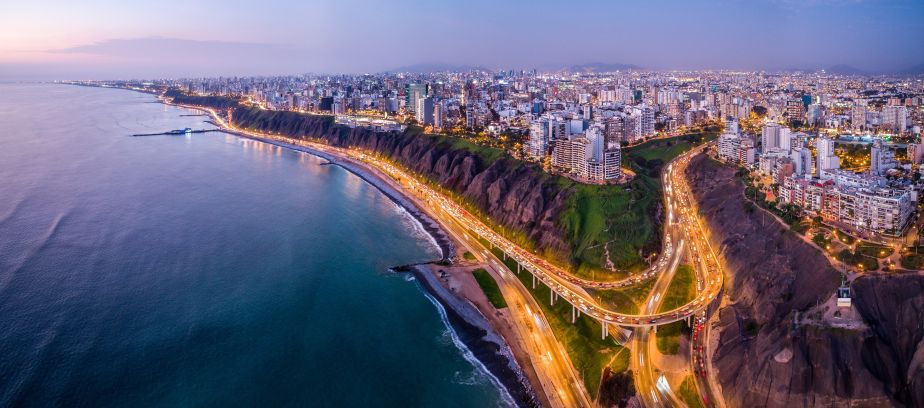
Explore Barranco, Miraflores, and the Historic Center while enjoying the ultimate backpacker experience at Pariwana Hostels.