
Historic Center of Lima: what to see, history, travel tips and best photo spots
Some cities are easy to visit in a few hours. Others only make sense once you slow down and walk them properly. Lima’s Historic Center belongs to the second group. It is not the kind of place you rush through with a checklist in one hand and your phone in the other. It is a place to look up at carved wooden balconies, step into plazas that still feel monumental, notice the layers of religion, politics and trade in the buildings around you, and understand how Lima became one of the most important cities in South America for centuries.
For many young travelers, Lima is the first stop in Peru. A lot of people arrive thinking of food, nightlife, ocean views or neighborhoods like Miraflores and Barranco. All of that matters, but the historic center gives you something the rest of the city cannot give in the same way: context. This is where you begin to understand Lima beyond the modern postcard. This is where the capital explains itself.
If you want to know why Lima became the political and religious heart of the Spanish Viceroyalty in South America, why its architecture still surprises visitors, and why this area remains one of the most intense and rewarding places to walk in the city, this guide will help. It is built for travelers who want more than a quick stop. It is for people who enjoy history, city walks, street life, practical advice and places that photograph beautifully.
Lima’s Historic Center is not just a collection of old buildings. It is a living urban area where monumental churches, colonial facades, republican plazas, crowded shopping streets, traditional food spots and traces of migration all come together in a relatively compact route. In one day, you can visit the famous San Francisco catacombs, stand in Plaza de Armas, walk through Jirón de la Unión, take in the elegance of Plaza San Martín, eat in Chinatown and discover corners that feel completely different from one street to the next.
It is also a great plan if you are staying at a hostel in Lima and want a day that combines history, culture, architecture, street energy and some of the best photo spots in the city.
A little history before you start walking
Before jumping into what to see, it helps to understand why this area matters so much. Lima’s Historic Center is not simply the “old town” of the city. It is the core from which an enormous part of Peru’s colonial political, administrative and religious life was organized. Lima was founded by Francisco Pizarro in 1535, and for centuries it served as the capital of Spanish power in much of South America. Decisions were made here, trade moved through here, religious influence spread from here, and public space was designed to show authority, hierarchy and prestige.
That is why walking through the center feels different from walking through other historic areas in Latin America. The scale is not accidental. The placement of the buildings is not random. Around the main square, institutions were organized to reflect the order of power: the cathedral, government buildings, civic structures and religious complexes all reinforced Lima’s central role in the region.
Over time, Lima changed constantly. Earthquakes damaged major buildings. Political independence transformed institutions. Urban expansion moved wealth and attention elsewhere. The center went through periods of neglect, pressure, reinvention and restoration. And yet, even after all those changes, it still preserves an extraordinary architectural and symbolic value. Churches, monasteries, mansions, balconies, plazas and historic streets remain part of a larger urban fabric that explains why this area is one of the most important places to visit in the capital.
This value has also been formally recognized. Lima’s Historic Center is listed as a UNESCO World Heritage Site because of its significance as a colonial urban ensemble and its rich architectural legacy. That status does not mean the area feels like an open-air museum. In fact, one of the most interesting things about the center is that it still feels active, messy, social and real. The history is there, but daily life is there too.
That balance is exactly what makes it worth visiting. You are not just looking at preserved facades. You are moving through a part of the city where history still interacts with traffic, commerce, religion, food, protest, tourism and local routine.
Why the Historic Center of Lima is worth visiting
Because it gives meaning to the city. Because it allows you to connect architecture, history and everyday movement in one route. Because it offers some of the best-known landmarks in Lima, but also many small details that make the experience more memorable than most travelers expect.
It is worth visiting if you want to understand how Lima became Lima. It is worth visiting if you enjoy places where you can move from a grand square to a narrow commercial street in just a few minutes. It is worth visiting if you care about photography, because very few parts of the city offer this much visual variety in such a walkable route.
For backpackers and young travelers, it also works well because it is flexible. You can do a quick half-day route if you are short on time, or spend most of the day here if you prefer slower travel. You can keep the budget low by focusing on public spaces and one paid entrance, or expand the plan with museums, food and a longer photo walk. In other words, this is one of the easiest cultural experiences in Lima to adapt to your style and budget.
And unlike many historic districts that look beautiful but feel empty, Lima’s center stays active. It can be intense, noisy and crowded, but that is part of its character. The route never feels flat. There is always something happening: people crossing a square, vendors calling customers, bells ringing, a procession forming, office workers moving through the streets, tourists looking up, someone taking wedding photos, someone else rushing through a portal. That living quality is one of the strongest reasons to go.
The best route through Lima’s Historic Center
A good visit is not only about choosing the right places. It is also about walking them in a smart order. The route below is practical, visually rewarding and easy to follow for first-time visitors.
1. Plaza de Armas: the essential starting point
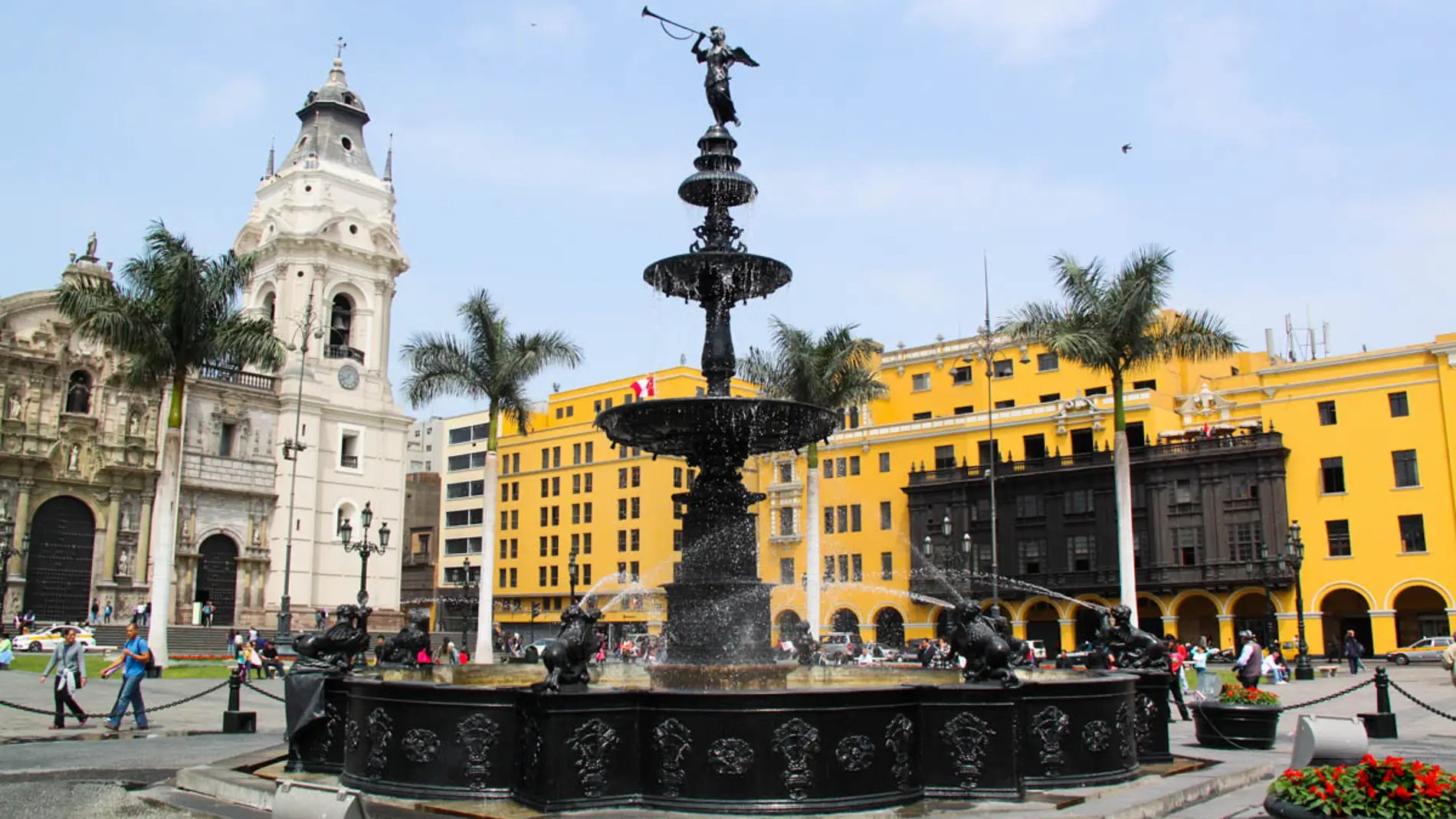
If this is your first time in Lima’s Historic Center, begin at Plaza de Armas, also known as Plaza Mayor. This is the symbolic heart of the city and the most obvious place to feel the historical weight of Lima. The square is framed by some of the capital’s most important buildings, and the overall composition is powerful in a way that even many experienced travelers do not expect.
At first glance, what stands out is its elegance. You see the central fountain, the gardens, the palm trees, the yellow facades, the balconies and the Cathedral of Lima. But beyond that first impression, the square helps you understand the entire area. From here, you can begin to read how power and ceremony shaped the city.
Do not treat Plaza de Armas as a place to stop for two minutes and move on. Walk around it. Change angles. Notice the balconies. Step back and see how the buildings frame the open space. Watch how the square changes depending on where the light is coming from. If you enjoy taking photos, this is one of those places where ten small movements can give you ten very different images.
Morning is often the best time to start here. The light tends to be softer, the heat is more manageable and the square usually feels slightly calmer than later in the day. Starting early also gives you more room to enjoy the area before the route becomes busier.
2. San Francisco and its catacombs: one of the most memorable visits in Lima
Of all the places in the historic center, this is one of the most consistently remembered by travelers. The San Francisco Monastery and Catacombs Museum combines religious art, architecture, cloisters, historic libraries and one of the city’s most striking underground spaces.
The catacombs are one of those places that stay in your head after the visit. They are visually powerful, but what makes them truly interesting is the context around them. They are not just there to shock visitors. They tell you something about colonial Lima, about religious institutions, burial practices and the way the city once understood life and death.
Many people talk about the catacombs, but the monastery above them deserves equal attention. The interiors, tiled spaces, wooden ceilings, courtyards and corridors turn the visit into something much richer than a simple underground tour. If you rush straight to the bones and then leave, you miss a big part of what makes the place special.
Try to allow enough time for this stop. It works best when you are not in a hurry. The atmosphere, scale and details all reward a slower pace. It is also smart to check the official timetable before going, since access rules and visiting hours can change.
3. Museum of the Inquisition: a fascinating stop, with one important warning
The Museum of the Congress and the Inquisition usually attracts visitors immediately because of its name alone. It is located in a building linked both to the history of the Inquisition in Lima and to important moments in Peru’s political life.
This makes it a very strong stop in theory, but here is the practical part that matters most: always check its current status before adding it to your route. In recent official information, public access has been listed as suspended due to restoration work. So yes, it absolutely belongs in a well-informed guide to the area, but it would be a mistake to assume it will always be open when you arrive.
What should you do, then? If it has reopened, include it without hesitation. The historical subject matter is compelling and adds depth to the route. If it is still closed, do not force the stop. You can still pass by the area, note the building and its significance, and continue toward the next parts of the walk. In that sense, even the exterior and historical context remain valuable.
This is a good reminder that old city centers are dynamic places. Restoration, public policy and maintenance affect access constantly. A smart traveler plans with curiosity, but also with flexibility.
4. Jirón de la Unión: where history meets the pulse of everyday Lima
After the monumental stillness of churches and plazas, Jirón de la Unión changes the rhythm completely. This pedestrian street is one of the most iconic urban connectors in central Lima, and walking it gives you a more immediate sense of the city as a lived space, not just a historic backdrop.
For a long time, Jirón de la Unión was associated with urban life, social encounters, commerce and public strolls. Today it still carries that energy, though in a denser, more chaotic and more openly commercial way. You will find shops, churches, fast-moving crowds, street scenes, old facades and small details that make it excellent for urban photography.
The best way to experience this street is not to treat it as a passage between two landmarks. The street itself is part of the attraction. Look at the upper floors. Notice the differences between facades. Watch how history and everyday trade collide in the same visual frame. If you enjoy photographing people, architecture or movement, this is one of the best stretches of the route.
Jirón de la Unión also helps you understand something important about Lima’s Historic Center: it is not frozen in a heritage display. It is alive, commercial, contradictory and constantly shifting. Some travelers find that energy overwhelming. Others find it refreshing. Either way, it feels real.
5. Plaza San Martín: republican elegance and one of the best photo spots in Lima
If Plaza de Armas represents Lima’s foundation and colonial power, Plaza San Martín reflects another stage of the city’s story. Here, the atmosphere changes. The square opens up. The architecture feels more republican, more theatrical and in some ways more cinematic.
This is one of the most photogenic public spaces in central Lima. The monument in the middle, the symmetry of the surrounding buildings and the overall sense of scale make it incredibly rewarding for wide shots. Even if you are not deeply interested in architecture, the space is visually satisfying almost immediately.
It is also an excellent place to slow down. Sit for a while. Watch how people move through the square. Compare its mood with Plaza de Armas. The two spaces say very different things about Lima, and seeing both helps you understand how the city evolved.
If you have the chance, return to Plaza San Martín at a different time of day. In softer daylight it looks polished and graceful. At sunset it can feel more dramatic. In the evening, depending on the day and atmosphere, the lighting can give it a completely different personality.
6. Chinatown: color, food and a different side of the historic center
After churches, plazas and official buildings, entering Chinatown feels like stepping into another register of Lima. The walk becomes more sensory, more food-focused and more intense in a different way. This is where the center reminds you that the city was also shaped by migration, trade and cultural mixing.
A lot of visitors make the mistake of thinking Chinatown is just an arch and a quick photo. It deserves more than that. Walking along Capón Street and nearby streets gives you a better sense of the Chinese-Peruvian presence in Lima and the way this area became part of the city’s cultural and gastronomic identity.
For young travelers, this stop works especially well because it breaks the solemnity of the earlier route. Here you can eat, explore shops, notice different signage, photograph more color and finish the walk with something delicious. If your idea of a good city experience includes both history and food, Chinatown is essential.
Go with a little hunger and a flexible mindset. Sometimes the best Chinatown plan is simply walking in, choosing a place that looks inviting and ordering something classic. The neighborhood can feel crowded and overwhelming at moments, but that energy is part of why it stays memorable.
Practical tips for visiting Lima’s Historic Center
Go during the day
For a first visit, daytime is the best choice. You will enjoy the architecture more, move around more comfortably and get better light for photos. The route is much easier to read and enjoy when you can actually see details in facades, plazas and interiors.
Carry only what you need
This is a high-traffic tourist and commercial area, so keep it simple. Bring your phone, some cash or a card, your ID and the essentials. Avoid carrying too many valuables or large unnecessary items.
Wear comfortable shoes
People often think the center is just a few squares close together, but once you start walking, the distance adds up fast. Between museums, churches, side streets, photo stops and food breaks, you can easily spend several hours on your feet.
Start early
Starting earlier gives you softer light, fewer crowds in some spots and more time to adapt the route. It is especially useful if you want to visit San Francisco calmly or take cleaner photos in the main squares.
Check official information before you go
This is one of the most useful tips in the whole guide. Opening hours, restoration work, temporary closures and access rules can change. The Inquisition Museum is the clearest example. A quick check before leaving can save you time and frustration.
Do not try to “complete” the center at full speed
This area rewards slower travel. If you race through it trying to see everything in record time, you will miss the small details that make the experience better: balconies, courtyards, shadows, street scenes, hidden facades and spontaneous moments.
Best photo spots in Lima’s Historic Center
If one of your goals is to come back with strong photos, these are the places that really deliver.
Photo spot 1: Plaza de Armas with the Cathedral in frame
This is the classic shot, and it is classic for a reason. From different positions around the square, you can include the Cathedral, the fountain, the gardens and the surrounding architecture in one image. Early morning and later afternoon usually work best.
Photo spot 2: The corners around Plaza de Armas
Do not stop with the obvious central shot. Some of the best images come from the edges of the square, where balconies, yellow facades, palm trees and old lamps create more atmosphere and less postcard cliché.
Photo spot 3: The exterior of San Francisco
The church and monastery of San Francisco are visually strong from multiple angles. The facade, the small square in front and the lateral views all offer excellent compositions with stone textures, vertical lines and historical atmosphere.
Photo spot 4: Inside the monastery, if photography is allowed
Always respect the rules of the site, but if photos are permitted in certain sections, cloisters and courtyards can give you some of the most memorable images of the day. The light and geometry often do a lot of the work for you.
Photo spot 5: Jirón de la Unión in perspective
Look for a segment where the pedestrian corridor stretches forward and the facades create repetition. This kind of shot is great for capturing movement and urban energy. It works even better if you find a moment with interesting foot traffic but not total visual overload.
Photo spot 6: Full wide shot in Plaza San Martín
This is where wide composition wins. Include the monument and the surrounding buildings in a broad frame. If you ever get access to an authorized upper-level viewpoint, even better, but street-level photos here can already look fantastic.
Photo spot 7: Plaza San Martín at sunset or early evening
This square changes character when the light changes. If you like more cinematic city photos, this is one of the best moments to experiment. Just pay attention to how the area feels and use normal city awareness.
Photo spot 8: Chinatown arch and Capón Street
This shot adds a very different layer to your visual story of Lima. It shows that the historic center is not only churches and official buildings. It is also migration, commerce, food and color. The best images usually include both the arch and people moving through the frame.
Photo spot 9: Small details most people ignore
Some of the best travel photos are not the most obvious ones. A balcony on its own, an old doorway, a shadow across a wall, a street vendor under an arcade, a lamp in front of a church facade. The center rewards patience and attention.
Common mistakes to avoid
One common mistake is assuming the historic center can be “done” in one rushed hour. You can technically pass through major landmarks quickly, but that is very different from actually experiencing the area. Between entrances, pauses, photos and walking, the route deserves real time.
Another mistake is not checking whether your chosen stops are currently operating. In old heritage districts, closures, maintenance or special access rules happen more often than travelers expect.
A third mistake is forgetting to look up. It sounds obvious, but many people move through the center focused only on the street level or their phones. That means missing balconies, cornices, domes, old windows and architectural details that are central to the experience.
It is also easy to turn the route into a “photos only, no context” day. Yes, Lima’s Historic Center is visually attractive, but the experience becomes much richer once you understand what you are looking at. Reading a little, joining a guided explanation or taking the time to interpret the buildings changes everything.
Finally, do not underestimate how tiring a city walk can be. Even if the weather looks mild, hours of walking through plazas, stone streets and busy pedestrian corridors can be more exhausting than expected. Bring water, take breaks and pace yourself.
How to plan your visit depending on the time you have
Not every traveler has the same schedule, so here is an easy way to adapt the route.
If you only have 3 hours
Do a compact version: Plaza de Armas, the exterior of the Cathedral, San Francisco and a shorter stretch of Jirón de la Unión. It is a quick first look, but still worthwhile.
If you have half a day
This is enough time for a solid visit. Start at Plaza de Armas, visit San Francisco, check the area around the Inquisition Museum, walk part or all of Jirón de la Unión and finish at Plaza San Martín. If you still have energy, add food in Chinatown.
If you have a full day
This is the best option. It lets you move slowly, take photos without stress, eat properly, spend longer inside key sites and return to any place that catches your attention. Lima’s Historic Center gets better the less rushed you are.
What to eat during the walk
A city walk always improves when you make time to eat. You do not need to turn the day into a full food tour, but adding one good stop makes the whole route more enjoyable. Chinatown is the obvious place for that. It is a great area to try chifa dishes, dumplings, fried rice and other Chinese-Peruvian favorites after several hours on foot.
If you want something lighter, you can also stop for coffee, a pastry or a simple snack near Plaza San Martín or along connected streets. The key idea is not to treat food as an afterthought. In Lima, eating is part of understanding the city.
Why this route works so well for backpackers and young travelers
Because it offers real value without requiring a huge budget or complicated logistics. In one compact area, you get major landmarks, history, architecture, public life, strong photography opportunities and good food. That combination is hard to beat.
It also works because you can shape it around your own travel style. Want a mostly free walking route? Easy. Want one powerful museum visit plus great city photos? Also easy. Want to combine culture in the day with a more social plan later? That works too.
For travelers just starting their Peru trip, the route is especially useful. Understanding Lima helps you understand the country better. The coexistence of colonial legacy, republican symbolism, religion, migration and urban intensity gives you a stronger lens for reading the rest of Peru later.
If you want more context for planning where to stay and how to organize your days in the capital, this Lima travel guide for backpackers is a very useful next step. And if you like having a better sense of routes before heading out, these free maps can help you connect the historic center with other parts of the city more easily.
If you are also trying to balance cultural plans with a more social side of Lima, check Pariwana’s Lima activity lineup. It is a smart way to combine a history-filled day in the center with something more relaxed, social or fun afterward.
So, is Lima’s Historic Center worth visiting?
Absolutely. And not just because every guidebook says you should go. It is worth visiting because few places in Lima bring together so many layers of the city in one walk. Plaza de Armas gives you the foundation story. San Francisco gives you religion, art and one of the city’s most unforgettable underground spaces. The Inquisition Museum adds historical depth when accessible. Jirón de la Unión gives you movement and urban texture. Plaza San Martín brings elegance and perspective. Chinatown reminds you that Lima was built not only through power and institutions, but also through migration, exchange and food.
Lima’s Historic Center is not always polished, quiet or perfectly curated. Sometimes it is loud, contradictory, crowded and intense. But that is exactly why it feels alive. For travelers who want more than a beautiful facade, that matters a lot.
If you visit with time, curiosity and a willingness to look beyond the obvious, this part of the city can easily become one of the most memorable moments of your stay in the capital. It is not just a place to see old buildings. It is a place to understand Lima.
And by the end of the walk, you will probably feel something simple but important: if you want to know the city for real, you have to pass through its center. That is where Lima still tells its story best.
✍️ Pariwana Editorial Team
Practical travel tips written by backpackers, for backpackers.
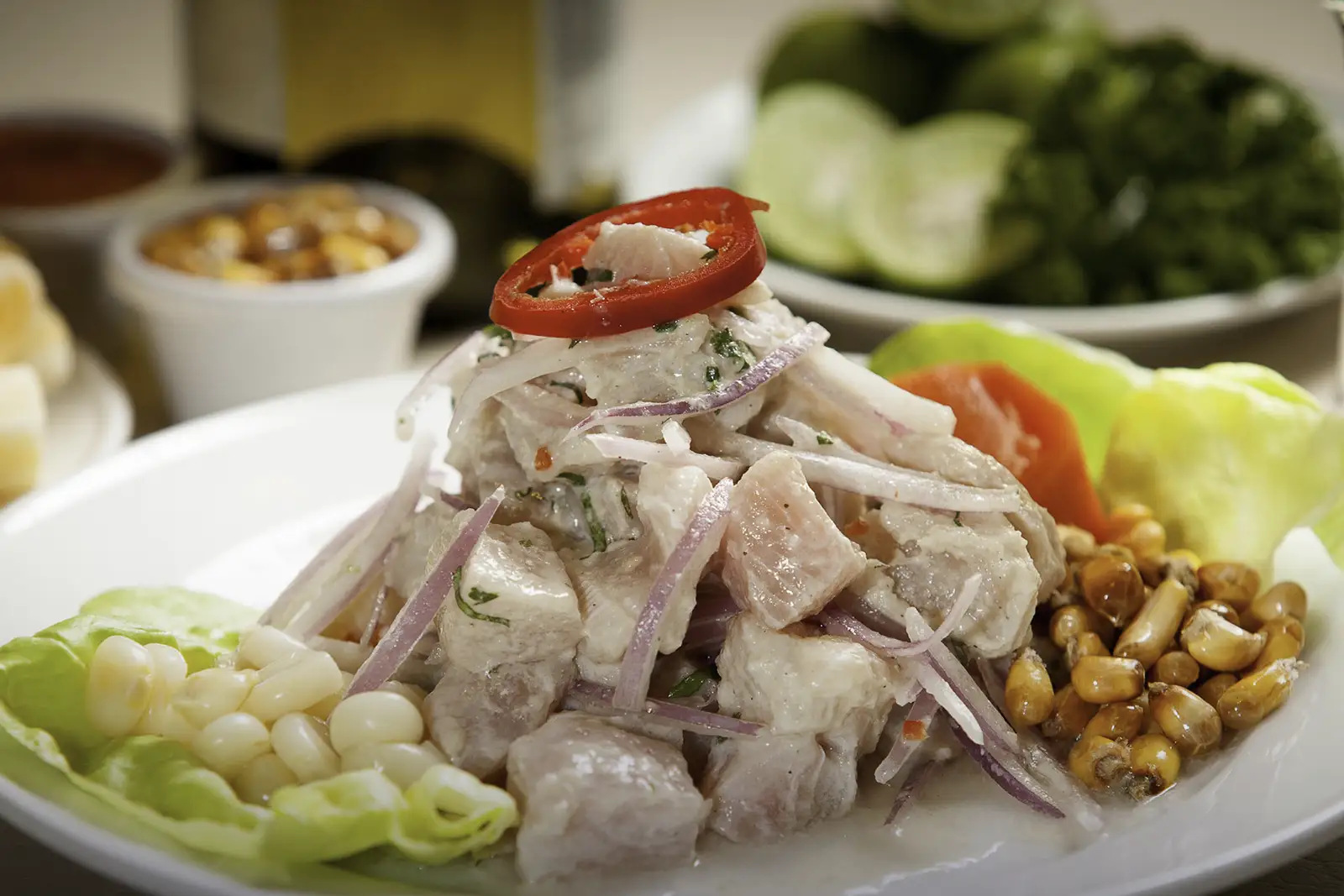
Discover the meaning and history behind Peru’s most famous dishes, from ceviche and lomo saltado to causa and ají de gallina.