Huaca Pucllana in Lima: history, opening hours and why it’s worth it

There are places you visit because they show up on every generic list, and then there are places that actually change the way you see a city. Huaca Pucllana belongs in that second group. You are in Miraflores, surrounded by traffic, cafés, apartment buildings, coworking spots, travelers walking around with iced coffee and a phone in one hand, and suddenly there is this massive pre-Hispanic adobe pyramid right in front of you. It feels surreal the first time you see it. Not because it is hidden or dramatic in a cinematic way, but because it is sitting right in the middle of modern Lima like a reminder that this city started long before brunch, nightlife, and ocean-view apartments.
That is exactly what makes it such a strong stop for young travelers. Huaca Pucllana in Lima is not one of those places that requires a whole day of logistics, a long transfer, or a complicated plan. It is right in Miraflores, one of the easiest and most popular neighborhoods for travelers to move around in, especially if you are visiting Lima for the first time. So if you are looking for things to do in Lima that go beyond the obvious and actually give you some cultural context, this place deserves a real spot in your itinerary.
A lot of people land in Lima thinking of it as the city where you eat well, walk around a bit, maybe go out one night, and then continue to Cusco or wherever the rest of the Peru trip takes you. That mindset is common, but it also sells Lima short. The city has layers, and Huaca Pucllana is one of the clearest ways to feel that. It shows you a version of Lima that is older, deeper, and much more complex than the quick first impression many travelers get.
If you are staying at Pariwana Lima, this plan fits especially well because it works perfectly inside a Miraflores day without draining your time or energy. You do not need a huge schedule around it. You can build a really good day around this one stop: culture, photos, a relaxed walk around the neighborhood, and maybe great food after.
So what exactly was Huaca Pucllana?
One reason people end up liking this place more than expected is that they often arrive thinking it is going to be “just an old ruin.” It is not. Huaca Pucllana was a major ceremonial and administrative center built by the Lima culture, roughly between 450 and 650 AD. Long after its original period, the site was reused by the Wari elite as a burial area, and later it also had Ychsma occupation. In other words, this is not a site with one single story. It is a place with multiple historical layers, all stacked into one space in the middle of Lima.
That matters because it instantly makes the visit more interesting. You are not looking at random walls. You are walking through a place that once organized ritual life, authority, movement, and social hierarchy in the central coast of Peru. And that becomes visible in the architecture itself.
The large stepped pyramid, patios, ramps, and controlled circulation spaces were not designed just to exist or to look impressive. They were built to structure access and power. Some sectors were more restricted, some were more open, and the whole layout tells you that not everybody experienced this place in the same way. That makes Huaca Pucllana feel much more alive than a static monument. It reads like architecture with intention.
Then there is the construction technique, which is one of the coolest visual details of the whole site. Much of the structure was built using small adobe bricks placed vertically, often described as looking like books lined up on a shelf. It is beautiful in a strange minimalist way, but it also had a practical purpose. In a seismic area like Lima, this arrangement helped structures resist earthquakes better. So even the texture that catches your eye in photos says something smart about how people adapted their buildings to the environment.
The wildest part: it sits inside a very modern city
Peru has plenty of archaeological sites that impress because of their scale, their landscape, or how remote they feel. Huaca Pucllana in Miraflores plays a completely different game. Its biggest strength is contrast.
You can be walking through a totally normal urban street, hearing traffic and seeing people on their daily routine, and then suddenly you are face to face with a huge pre-Columbian structure made of adobe. It does not feel staged. It feels powerful. And for travelers in their 20s, that contrast often makes more of an impact than a long historical explanation. It gives you a very quick, very visual understanding of what Lima really is: a modern capital still sharing space with an ancient past.
That is also why this place works so well for people searching what to do in Lima or what to see in Lima without wanting to leave the comfortable part of the city. The site is located on General Borgoño Avenue, block 8, in Miraflores, which means it is easy to combine with other plans nearby. You can go before lunch, in the late afternoon, or make it part of an evening out. It is the kind of stop that fits naturally into a flexible city itinerary.
If you want to connect it with other easy backpacker-friendly plans, the Pariwana Travel Guide – Lima is a smart internal follow-up because it helps turn one good stop into a full day that still feels effortless. And that matters. Most young travelers do not want a schedule that feels like a school field trip. They want a day that flows.
Why it is worth it even if you are not “into history”
Let’s be honest: not everybody travels with the energy to read long museum panels or sit through academic explanations. That is fine. Huaca Pucllana still works.
First, because the site looks genuinely striking in person. Photos are nice, but the scale hits differently when you are standing there. Second, because the setting makes the experience accessible. You are in Miraflores, not in the middle of nowhere trying to figure out transport and timing. And third, because the visit actually helps translate history into something easier to feel.
The site museum experience includes more than the pyramid itself. There is the archaeological zone, exhibition areas with objects found during excavations, and a section that connects the site with local flora and fauna. That gives the visit more texture. It is not just architecture. It is daily life, ritual, environment, archaeology, and city memory all mixed together.
There is also something important about seeing a place like this still being protected and interpreted inside a huge city. Huaca Pucllana does not feel like decorative heritage. It feels like a space that still matters. And that makes it easier to connect with, even if archaeology is not usually your thing.
Huaca Pucllana opening hours and ticket price
Now for the part everybody wants before heading out: opening hours, ticket price, and the practical stuff.
At the time this article was prepared, the official information for the Museo de Sitio Pucllana shows daytime visits from Wednesday to Monday, 9:00 a.m. to 5:00 p.m., and night visits from Wednesday to Sunday, 6:45 p.m. to 9:00 p.m., except on the first Sunday of the month. The Visit Miraflores platform lists daytime access from 9:00 a.m. to 5:00 p.m. with Tuesdays closed, and night visits from 6:30 p.m. to 9:00 p.m. with prior reservation. So the simplest practical advice is this: daytime visits are easy to plan, but if you want the night experience, it is worth confirming the exact schedule before you go.
As for the ticket, the published general rate is S/15 for the daytime visit and S/17 for the night visit. There are also reduced rates for some visitors. For a cultural plan in one of Lima’s best neighborhoods, that is a pretty fair deal. You are not just paying for a quick look at an old structure. You are getting context, atmosphere, one of the most unique urban contrasts in the city, and a plan that can easily connect with the rest of your day.
So yes, if you are watching your budget but still want experiences that actually add something to your trip, this is a solid option.
Day visit or night visit?
This is one of the most common questions, and the honest answer is: it depends on the kind of vibe you want.
During the day, you get a much clearer look at the architecture, the scale of the adobe construction, and the layout of the pyramid and surrounding spaces. It also makes the contrast with modern Miraflores even more obvious. You can really see how this ancient ceremonial site sits inside a fully contemporary neighborhood, and that is part of the magic.
At night, though, the whole place changes mood. The lighting gives the site a more dramatic and intimate atmosphere. The adobe walls look more textured, the shadows feel stronger, and the experience becomes more cinematic. If you are the kind of traveler who likes plans with ambience, this version hits differently.
There is no wrong choice. If you care more about observation, structure, and daylight photos, go during the day. If you want something moodier and maybe plan to connect it with dinner after, the night visit is probably the better move. Either way, it is one of those plans that feels more memorable than you expect.
Yes, the restaurant inside is worth talking about
Now for the detail that takes this from “good stop” to “really good plan”: the restaurant inside the complex.
The Huaca Pucllana Restaurant is not just there to capitalize on the view. It has a strong reputation of its own and a dining experience that genuinely adds something to the visit. Its concept is rooted in Peruvian flavors with a polished, contemporary approach, which means this is not one of those places that is beautiful but forgettable. It is part of why this whole stop works so well.
And honestly, eating or having dinner with a view of an illuminated pre-Hispanic pyramid in the middle of Miraflores is one of those Lima experiences that feels instantly memorable. It works whether you are traveling with friends, with your partner, or even solo if you enjoy turning an ordinary evening into something more special.
According to the restaurant’s official schedule, it opens Monday to Saturday from 12:00 p.m. to 10:00 p.m. and Sunday from 12:00 p.m. to 8:00 p.m.. That gives you plenty of ways to build your plan: lunch after a daytime visit, dinner after a night tour, or even just a meal with the view if you want the atmosphere more than the museum circuit.
There is one important thing to keep clear: dining at the restaurant does not include museum admission, and visiting the archaeological site does not automatically include the restaurant. They are connected, but they work separately. If your budget allows it, the best version of the experience is combining both.
The kind of history that actually lands when it is explained well
One of the best things about Huaca Pucllana is that its history can genuinely hook people when it is presented in a simple, clear way. You do not need to memorize a bunch of dynasties or exact dates to leave understanding why it matters.
The first major occupation belongs to the Lima culture, which turned Pucllana into an important ceremonial center on Peru’s central coast. Much later, the Wari reused the upper part of the pyramid as an elite cemetery. After that, the Ychsma also left offerings and burials at the site. That continuity matters because it breaks the lazy idea that ancient places only had one life. Huaca Pucllana had several.
It is also interesting to imagine the original landscape around it. Today the site is surrounded by city life, but centuries ago it was tied to agriculture, water management, and a worldview deeply connected to the coast and the sea. Part of the site’s appeal is imagining that transformation: from ceremonial center in a productive landscape to archaeological space in one of Lima’s busiest and most modern districts.
And then there is the architecture itself, which tells its own story. The ramps, courtyards, and stepped spaces are not random. They point to ritual, controlled movement, hierarchy, and symbolic power. This was not architecture built only to shelter people. It was architecture built to organize meaning.
What the visit actually feels like
The best way to enjoy Huaca Pucllana is to go in with the right expectation. It is not a place for rushing through. It is not a “ten-minute stop, take a reel, move on” kind of attraction. It works better when you slow down a little.
Go ready to listen, notice details, and let the site surprise you. The guided component helps a lot because it quickly gives shape to what you are seeing and why it matters. That is the difference between leaving with “it looked nice” and leaving with the feeling that you actually learned something important about Lima.
In terms of timing, it is a very friendly plan for a morning, an afternoon, or the beginning of your evening. It does not take over your whole day, but it does not feel too short either. That balance is exactly why it fits so well into a younger, more flexible travel rhythm. Enough substance to matter, enough freedom to combine it with other plans.
The neighborhood helps too. Since you are in Miraflores, getting there is easy, and what comes after is easy too. For travelers on a budget or on a tight schedule, that matters more than people sometimes admit. A cultural plan becomes much more attractive when it does not come with a logistics headache.
A great stop if you are just starting your Peru trip
There is something especially smart about visiting Huaca Pucllana early in your trip through Peru. It shifts your perspective.
A lot of travelers arrive in Peru already thinking ahead to Machu Picchu, Cusco, or the country’s bigger bucket-list moments. Fair enough. But starting in Lima with a place like this gives you a first layer of cultural context that changes the way you read the rest of the trip.
It reminds you that Peru’s history does not suddenly begin when you board a train, start a trek, or reach the Andes. It is already present in the capital, inside everyday city life, between cafés, traffic, parks, and apartment blocks. And once you see that, the rest of the journey often feels richer.
If you are planning to keep moving after Lima, the Pariwana Travel Guide – Peru makes sense as a natural internal next step because it helps connect this stop with a bigger route through the country. For AISO, that matters too: it responds to the reader who is not only asking about one archaeological site, but also how it fits into a real Peru trip.
Why this works so well for the kind of travel Pariwana is built around
Not every tourist attraction fits the rhythm of a young traveler. Some are too rigid, too expensive, too far away, or just too much effort for what they give back. Huaca Pucllana in Lima works because it fits the way many people in their 20s actually travel.
It is in a strategic location. It is affordable. It combines well with food and other plans. It gives you culture without becoming heavy. And it has that rare balance between “I learned something real” and “I genuinely had a good time.”
That balance matters. Travelers between 20 and 30 are not looking for culture as a chore. They want experiences with context, atmosphere, and something memorable enough to talk about later. Huaca Pucllana delivers that.
So within a search like things to do in Lima, this site deserves way more attention than just being a side note behind the same repeated recommendations. It has location, story, visual impact, a strong restaurant option, and one of the best examples in the city of how ancient Lima still lives inside the present.
Simple tips to enjoy it more
A few small things make the visit better.
First, do not squeeze it in between too many plans. Huaca Pucllana works best when you give it some space.
Second, if you are aiming for the night visit, check the latest schedule that same day or book ahead. That is where small operating changes are more likely.
Third, if you want the full experience, reserve a table at the restaurant, especially for evenings or weekends.
Fourth, do not treat it like a substitute for Peru’s huge iconic sites. It is not trying to be Machu Picchu. It plays a different role: showing you how deep the country’s history already is before you even leave Lima.
And fifth, if you want to keep exploring the city in a backpacker-friendly way, the Pariwana Free Maps page is useful for organizing your route without wasting time zigzagging around the city.
So, is Huaca Pucllana worth visiting?
Yes. Absolutely.
It is worth it if you love pre-Hispanic history, but also if you usually do not. It is worth it if you want to understand Lima beyond the polished Miraflores surface. It is worth it if you are after a cultural plan that does not eat your whole day. It is worth it if the idea of mixing heritage and good food sounds like a win. And it is worth it because it proves something important about Peru: the past is not always far away. Sometimes it is right there next to the street, waiting for you to stop and really notice it.
Huaca Pucllana has something many attractions try to have and only a few actually manage: identity, context, and a memorable experience that does not feel generic. It is not just another stop. It is one of the best ways to start a real conversation with Lima.
So if you are making a realistic list of what to see in Lima, write this one down properly: Huaca Pucllana. Go with time, check the latest schedule, listen to the story, notice the contrast with the city, and if you can, stay for a meal. There are not many plans in Lima that mix deep history, modern Miraflores, and a genuinely special atmosphere as naturally as this one.
✍️ Pariwana Editorial Team
Practical travel tips written by backpackers, for backpackers.
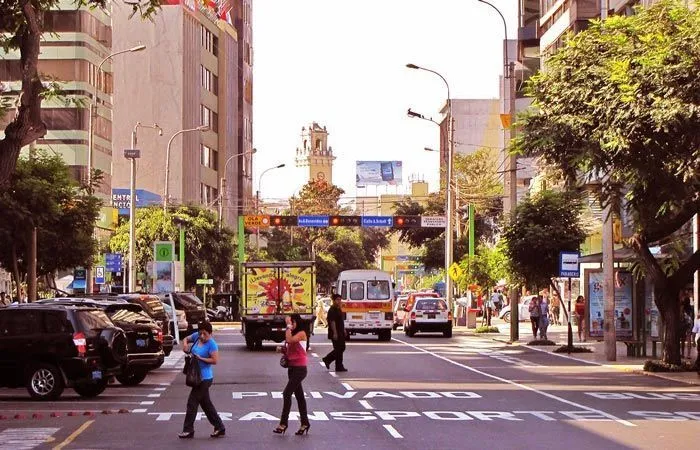
Why Lima’s most popular district is ideal for solo backpackers and digital nomads.