How to Experience Peruvian Culture as a Backpacker

Traveling around Peru can easily turn into an endless checklist of famous places, beautiful photos, and long bus rides. But it can also become something much more meaningful: a real cultural experience. That difference does not depend only on the destination itself. It depends on how you choose to move, where you stay, who you talk to, what you eat, what you ask, and how much time you allow yourself to observe before rushing to the next pin on the map.
For many young travelers, travel to Peru begins with names they already know: Lima, Cusco, Machu Picchu, the Sacred Valley, or Rainbow Mountain. And yes, they deserve the attention they get. But Peruvian culture is not something you understand only through iconic landmarks. You understand it much better when you slow down and travel like a backpacker: walking more, spending with intention, sleeping in social spaces, eating where locals eat, listening to stories, joining activities, and letting the destination teach you more than a few facts you can repeat later.
Peru is a multicultural country with living traditions, world-famous food, and a powerful mix of Andean, Amazonian, coastal, Afro-Peruvian, mestizo, and contemporary influences. That is why if you truly want to know the country, it is not enough to just “see things.” You need to learn how to read the atmosphere. The sound of a square at night. The rhythm of a market in the morning. The way a conversation changes when you try to say a word in Quechua. The pride in someone’s voice when they explain a regional dish. The meaning of a patron saint festival that may look colorful to a visitor but represents memory, faith, identity, and continuity for a community.
The best part is that you do not need a luxury trip or a complicated plan to experience all this. In fact, many of the most memorable moments happen when you choose a flexible route, stay in a good backpacker hostel in Peru, join shared activities, and stay open to everyday life. That is when the trip starts to feel more human.
Peruvian culture is not only found in museums
Some travelers arrive looking for “culture” and immediately think of museums, ruins, or historical tours. All of that adds value, of course. But Peruvian culture also lives in daily life: in the lunch menu, in the music coming from a small shop, in the way people bargain in a market, in the role celebrations play in local communities, in textiles, in language, and in the way tradition coexists with modern life.
That is why one of the smartest things you can do is stop seeing your journey as a collection of attractions and start seeing it as a context-rich experience. Once you understand that, even a simple afternoon can teach you more than an overpacked itinerary.
Sitting in a plaza with no rush, walking into a neighborhood market, trying a local breakfast, noticing how Spanish changes from Lima to Cusco, or asking someone what important celebration is coming that week are small acts that bring you much closer to the place. That kind of curiosity is gold for any backpacker.
Peru also has a huge advantage for young travelers: it offers an incredible cultural density at a reasonable cost compared with other major destinations around the world. You can combine heritage, gastronomy, nature, history, and social life without losing the independent spirit that so many people look for when following a flexible and authentic Peru travel guide.
Slow travel: the most underrated way to understand a country
If you really want to experience Peruvian culture, travel a little slower. You do not need to become a six-month nomad. You just need to avoid one of the most common backpacker mistakes: trying to see everything too fast. When you do that, Peru becomes a postcard. When you stay a little longer in each city, it starts becoming an experience.
Spending several nights in Lima or Cusco is not “wasting time.” It is gaining depth. It gives you the chance to notice how people move through the city, identify neighborhoods with distinct personalities, return to the same café, revisit a market, recognize familiar faces, discover temporary events, and connect better with both other travelers and local people. That repetition is exactly what turns a famous destination into a place that starts to feel familiar.
Instead of asking yourself how many places you can cross off your list, try asking this instead: in what moments of this trip am I actually going to live with the country? That is usually where the best version of backpacking begins.
Lima: a powerful gateway into contemporary Peru
A lot of travelers make the same mistake with Lima: they treat it only as a stopover before heading to Cusco. The temptation is understandable, but rushing through Lima means missing an essential part of the puzzle. The capital is not just where you land. It is also one of the best places to understand contemporary Peru.
Lima brings together history, food, internal migration, very different neighborhoods, street art, nightlife, the Pacific Ocean, and a kind of urban energy that may feel chaotic at first but soon becomes addictive. A smart way to begin is to mix classic plans with time to explore on your own. A good base is the Lima travel guide for backpackers, and then use that information as a starting point, not as a limitation.
The city works best when you explore it in layers. One day you can walk through historical areas or look out at the Pacific from the malecón. The next day you can dive into street food, independent fairs, or creative neighborhoods. And if you stay at a well-located hostel in Lima, everything becomes easier because you move around better and meet people to share spontaneous plans with.
Miraflores is usually a comfortable area to begin because it combines safety, movement, cafés, bars, and easy access to different parts of the city. But experiencing Lima’s culture does not mean staying inside a comfortable bubble. The trick is to use that comfort as a base from which to explore with curiosity.
One of the easiest ways to break the ice with the city is through activities with other travelers. They help you get over the first layer of hesitation and often lead to markets, bars, museums, concerts, or unexpected walks. If you are interested in that social side of travel, the daily activities at Pariwana Lima are worth checking out, because a strong social hostel experience can make the difference between a quick stop and a much richer stay.
Cusco: where history stops feeling abstract
It is impossible to talk about Peruvian culture without talking about Cusco. But there is a superficial way to experience the city and a deeper one. The superficial way is to treat it only as a launch point for Machu Picchu. The deeper way is to understand that Cusco itself is already one of the most culturally intense cities in South America.
Here, history does not feel locked inside display cases. It is present in the streets, in the architecture, in the blend of Andean and colonial influences, in the presence of Quechua, in the markets, in religious festivals, in handicrafts, in textiles, in food, and in the everyday relationship people have with memory. Even something as simple as walking from a quiet street into a crowded square can feel like stepping in and out of different layers of time.
One of the best things you can do in Cusco is leave yourself a morning or afternoon without a rigid plan. Walk, observe, enter an artisan store without buying impulsively, ask questions, and listen. The Cusco travel guide can help you orient yourself, but the city only really starts making sense when you leave room for the unexpected.
Staying in a hostel in Cusco that is well connected to the center also adds a lot to the experience. It lets you return on foot, rest, reset your plans, and head back out without feeling like everything is logistics. And if you want to combine cultural immersion with social energy, the activity lineup at Pariwana Cusco can help you find that balance between local experiences and travel community.
Cusco is the perfect place to practice something important: not treating Andean culture like a show, but like a living reality. That means respect. It means not turning every ritual into content. Not invading spaces. Not taking photos of people without asking. Not assuming that everything “traditional” exists to entertain tourists. That shift in attitude changes the quality of the trip completely.
Food: one of the easiest and most honest ways to connect
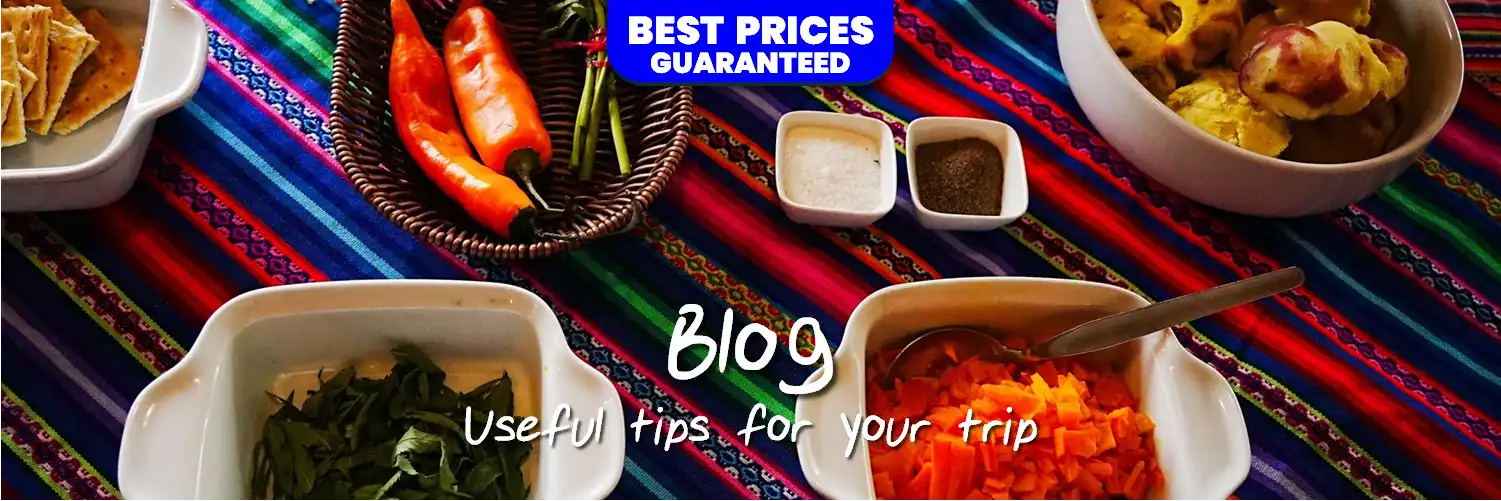
If there is a direct path to the cultural heart of Peru, it runs through food. And no, that does not mean you always need to book expensive or famous restaurants. Peruvian culinary culture can also be discovered in markets, daily set lunches, well-chosen food stalls, regional breads, early morning soups, fresh juices, desserts, spicy dishes, tamales, and conversations around the table.
Peruvian gastronomy is a blend of history, territory, and cultural mixing. In a single trip, you can notice Andean, coastal, Amazonian, criollo, Afro-Peruvian, Chinese, Japanese, and European influences, all reinterpreted in local ways. That is why eating in Peru is not just about “trying delicious dishes.” It is about understanding how regions and memories speak to each other inside the country.
For backpackers, food has another huge advantage: it breaks barriers. Sharing a table, asking for recommendations, wondering what ingredients a dish includes, or daring to try something new often leads to very natural conversations. It is one of the simplest ways to connect with culture without making the experience feel forced.
It is worth reading about Peruvian gastronomy and its traditions before or during your trip so you can better understand where many flavors come from. And if your route includes coast, highlands, and jungle, try something representative in each region. That is when you begin to understand that Peru cannot be reduced to one single cuisine.
It also helps a lot to join a cooking class or a shared food experience whenever the chance appears. You are not only learning recipes. You are learning ingredients, stories, and contexts. That is exactly the kind of activity that turns tourism into a real Peruvian culture experience.
Festivals, local calendars, and everyday life
One of the most powerful ways to experience Peruvian culture is by being in the right place at the right time for a local celebration. The problem is that many travelers do not research this well and only find out too late. In Peru, the festive calendar matters a lot and can completely transform the atmosphere of a city or region.
Not all festivals have the same scale or meaning. Some are strongly tied to religion, others to agricultural cycles, others to regional identity, and many combine devotion, music, dance, community, and food in a very Peruvian way. For backpackers, this is an incredible opportunity, but it also requires attention and respect.
If you are curious about traditional celebrations, events like the Ayacucho Carnival are a great reminder that festivals are not just entertainment. They are expressions of identity. On the coast, a celebration like Lord of Miracles shows the strength of religious tradition in urban life. And in Cusco, Inti Raymi remains one of the clearest references when talking about Andean heritage and collective memory.
The key is not to treat these celebrations like an “exotic show.” If you get the chance to witness one, pay attention to how the community participates. What people wear. What is sold on the streets. What songs are sung. What foods appear. What kind of emotion fills the air. Those details reveal more than any quick guide ever could.
Folk art, textiles, and handmade knowledge
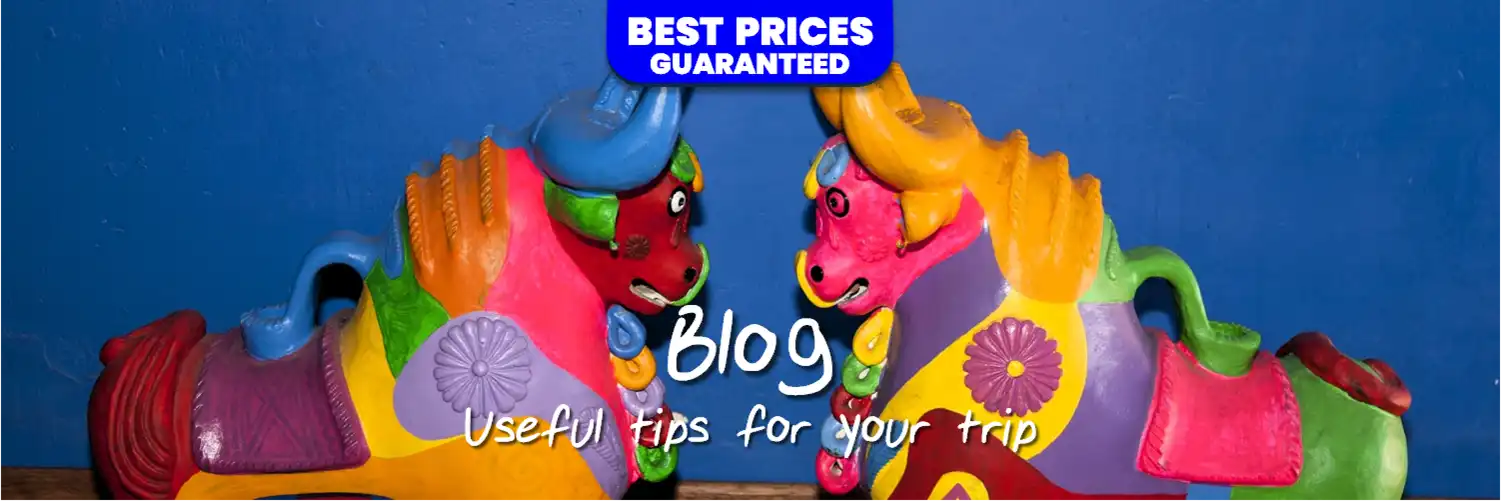
Another great doorway into Peruvian culture is folk art. And here again, it helps to go beyond quick souvenir shopping. Behind each textile, retablo, ceramic piece, mask, or craft item, there may be techniques passed down through generations, regional symbols, and entire ways of telling the world.
In the Andean context, for example, textiles are much more than something beautiful to take home. They are language, identity, territory, and continuity. Something similar happens with folk art from regions such as Ayacucho or with the country’s different ceramic traditions. Once you understand that, your way of looking at markets and artisan shops changes.
This is not about romanticizing everything or assuming that every handmade object you see carries the same level of authenticity. It is about learning how to ask better questions: who made it, where it comes from, what the colors mean, how long it takes to create, and whether you are buying directly from the maker or through an intermediary. That conversation can be just as valuable as the purchase itself.
If you want to go deeper into specific expressions, resources like the article about the Ayacucho retablo help explain that many traditional pieces are not empty decoration. They are complex forms of memory and representation.
Languages, customs, and small gestures that open doors
A huge part of experiencing Peru as a backpacker is learning how to relate with respect. Sometimes we think of “culture” as something monumental, when in reality it begins with very simple gestures. Greeting people properly. Saying thank you. Asking before taking photos. Not making fun of accents. Not assuming instant closeness. Listening more than you speak.
In many parts of the country, different linguistic and cultural identities coexist. Spanish is dominant in many spaces, yes, but Peru also has enormous richness in Indigenous languages and peoples. Reading a little about the Indigenous peoples of Peru can help you travel with more sensitivity and fewer stereotypes.
Even learning a few basic words or showing genuine interest in local history can shift an interaction. You do not need to become an expert. You just need to leave behind the attitude of the tourist who believes everything should be served and explained on demand.
It also helps to remember that warmth exists, but it does not always show up through the same social codes as in other countries. Sometimes closeness grows through consistency rather than immediate enthusiasm. That is another reason slow travel wins again: once you return to the same spaces, conversations begin to flow more naturally.
The right hostel can bring you much closer to local culture
Some people see a hostel as nothing more than a cheap place to sleep. That is a mistake. Choosing the right base can bring you much closer to the culture of a destination. A good hostel with activities does not just save you money. It also helps you meet people, share useful information, and discover experiences you may not have found on your own.
That does not mean locking yourself inside an international bubble. It means using the hostel as a platform. Talk with the staff. Ask about events. Join walks, classes, themed nights, or activities that act as bridges to the city. Very often, that is where the most honest tips appear: markets, neighborhoods, food spots, schedules, customs, and little cultural details that generic rankings usually miss.
If you are planning your route, a solid starting point is the Peru travel guide, then organizing your journey with the help of the free backpacker maps, and adjusting everything to the real pace you want for the trip. If your route also includes the classic Sacred Valley stretch, keeping a Machu Picchu and Sacred Valley guide nearby can help you avoid turning one of Peru’s most powerful regions into a rushed and superficial visit.
For many young travelers, hostels also serve another important function: they make it easier to meet people while traveling without making it feel forced. And that is part of the cultural experience too. Sometimes the way you understand a country does not come only from what you see, but from the conversations you have about it with other travelers, hostel staff, or local people you meet through those spontaneous networks.
Responsible travel: culture yes, extraction no
There is a very clear line between experiencing a culture and consuming it. The first involves respect, presence, and exchange. The second often involves hurry, exoticization, and using other people as scenery for your personal adventure. If you want to travel better in Peru, it helps to keep that distinction in mind.
Traveling responsibly means, among other things, preferring experiences that create local value, respecting community norms, taking care of heritage and natural spaces, not trivializing cultural symbols, and understanding that not everything needs to become a photo or a video. It also means accepting that sometimes the best choice is to watch, learn, and not intervene too much.
In a country as diverse as Peru, sustainable travel is not just a nice idea. It is a practical necessity. Iconic sites, protected areas, and traditional celebrations receive visitors all the time, and the way you behave does leave a mark. If your route includes nature as well, official information from SERNANP can help you plan with more awareness.
The same goes for cultural heritage. Both material heritage and many forms of intangible heritage require care and respectful transmission. The UNESCO work on Peru’s living heritage is a useful reminder that these practices are not frozen relics. They are living expressions sustained by communities.
Common mistakes that keep you away from the real culture
Sometimes you do not need to do something obviously wrong to miss the essence of a trip. It is enough to fall into a few very common backpacking habits. One of them is moving only through viral recommendations. When everyone ends up going to the same three places, ordering the same dish, and taking the same photo, the journey starts to look more like an internet routine than a personal experience.
Another common mistake is treating local life as an aesthetic backdrop rather than a human reality. That happens when you love photographing markets, clothes, murals, or plates of food but do not take the time to understand what you are seeing. It also happens when you push conversations only to collect an interesting anecdote, or when you turn every unfamiliar custom into a quirky story to tell later.
A third mistake is assuming that “cheap” automatically means “authentic.” Not necessarily. Traveling on a budget can absolutely bring you closer to everyday spaces, but authenticity is not determined only by price. It depends much more on the attitude you bring, the respect you show, and the time you give a place.
And there is one more important point: do not idealize everything. Peru is fascinating, complex, and deeply diverse, but it is also a real country with social tensions, regional differences, and rhythms that may not always match your expectations. Understanding that is also part of experiencing culture, because it forces you to move beyond the simplified idea of a perfect destination.
A simple way to design a more cultural backpacking route
You do not need an impossible itinerary to feel more connected to the country. In fact, an overly tight itinerary usually works against you. A better strategy is to choose fewer places and give each one a clear intention.
For example, Lima can be your entrance into urban, creative, gastronomic, and social Peru. Give yourself time to walk, eat well, notice how classic and contemporary elements mix, and stay open to conversations with both locals and other travelers. Then Cusco can become your deeper immersion into living history, Andean memory, markets, festivals, high-altitude rhythm, and the closeness of communities and landscapes that force you to slow down.
If you continue to other parts of the country, try to give each leg of the trip a guiding question. Not only “what am I going to see here?” but also “what do I want to understand here?” On the coast, maybe you want to understand the relationship between city, ocean, and cuisine. In the highlands, perhaps textiles, Andean worldviews, or local festivals interest you most. In the Amazon, maybe it is the relationship with biodiversity, jungle food, or the cultural expressions of Indigenous communities.
That small mental shift makes a huge difference because it turns your backpacking route into a journey with emotional and intellectual direction. You are no longer moving only for efficiency. You are moving because of curiosity.
So, how do you really experience Peruvian culture as a backpacker?
You experience it with curiosity, time, and respect. You experience it by eating beyond the obvious, talking with people, observing more carefully, choosing hostels that create community, joining activities with meaning, paying attention to the local calendar, asking better questions, and understanding that Peru is not a single postcard but an ongoing conversation between regions, memories, languages, flavors, and ways of living.
You experience it by accepting that you will not understand everything in one trip, but you can absolutely start building a better relationship with the country. And that already makes a huge difference.
Because in the end, the trips that stay with you are not always the ones where you “saw” the most places. They are the ones that changed the way you move through the world. And Peru, when explored with open eyes and a backpacker spirit, has a lot to offer in exactly that way.
✍️ Pariwana Editorial Team
Practical travel tips written by backpackers, for backpackers.

Forget gourmet rankings. This is the real guide to the restaurants locals in Lima keep going back to — by food category.